Have you ever looked down at your brush, noticed little pieces of hair everywhere, and wondered, “Why is my hair literally breaking off?” You're definitely not the only one.
Breakage is one of the most common concerns I hear about behind the chair. It can show up as short, frizzy pieces around your part, ends that feel rough no matter what you do, or hair that never seems to get any longer. And it rarely comes down to one single thing. Heat, chemical processing, dryness, and even small everyday styling habits can all add up.
The good news? Understanding what's causing your breakage is the first step toward preventing more damage. Let's walk through it together.
Hair Breakage vs. Hair Shedding
Before we talk about causes, it helps to know what you're actually looking at. Breakage and shedding can look similar in your brush, but they're two different things.
- Hair breakage
- The strand snaps somewhere along its length rather than coming out at the root. You'll usually notice shorter pieces of different lengths, uneven or see-through ends, and a fuzzy halo around the hairline or crown.
- Hair shedding
- A whole hair naturally releases from the scalp as part of its growth cycle. Shed hairs are usually full length and may have a tiny white, club-shaped bulb at one end. Losing some hair every day is completely normal.
The 7 Most Common Causes of Hair Breakage
Most of the breakage I see comes from a combination of the causes below. As you read, think about your own routine. You may recognize more than one.
1. Too Much Heat Styling
Flat irons, curling irons, and blow dryers are part of most of our routines, and that's okay. The trouble is repeated high-temperature styling, especially passing a hot tool over the same section again and again. Over time, excessive heat can weaken the hair fiber, leaving it dry, brittle, and more likely to snap.
- Always use a heat protectant before blow-drying or using hot tools.
- Lower your temperature settings. Many hair types don't need the highest setting, and fine or lightened hair usually needs less heat than thick, coarse hair.
- Make fewer passes. One slow, controlled pass on a smaller section often works better than several quick ones.
- Let hair air-dry partway before blow-drying, and give it heat-free days when you can.
2. Bleaching and Chemical Processing
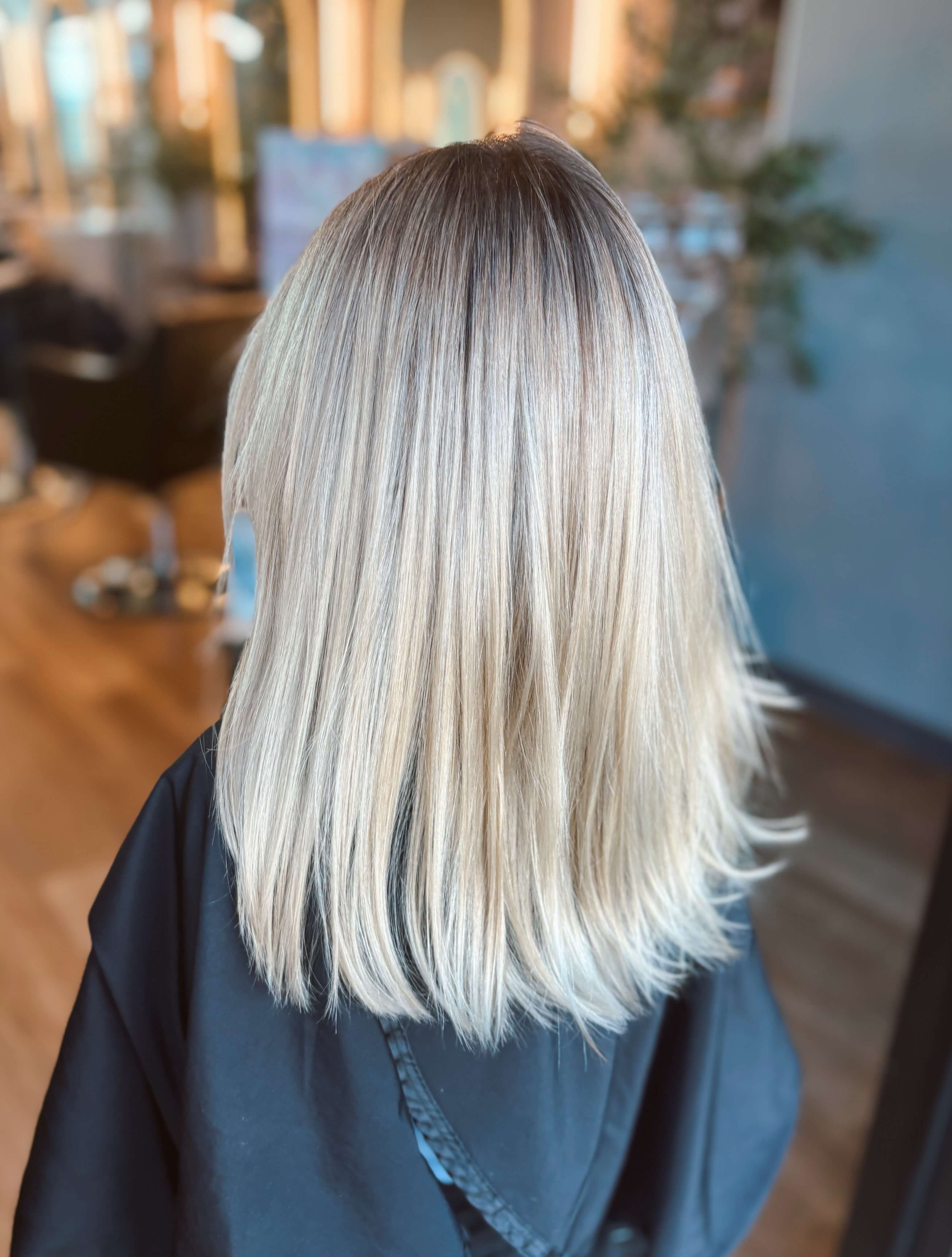
Highlights, blonding, and other chemical services change the inside of the hair strand, which is how we get those beautiful results. But lightening also leaves hair more fragile. Bleached hair breaking off is often linked to overlapping lightener onto hair that's already been lightened, chemical services done too close together, or previously compromised hair going through another strong process.
This is why a professional consultation really matters. Before any highlights or blonding service, I look at your hair's history, feel how it's holding up, and talk honestly about what's realistic for its current condition. Sometimes the healthiest plan is reaching your goal in a few gentler steps.
One honest note: chemical damage can't be completely reversed. Regular conditioning and bond-building products may help improve how your hair feels and handles, and can help reduce further breakage, but they don't undo damage that's already there.
3. Dryness and Lack of Conditioning
Dry hair tends to feel rough, look dull, and lose its flexibility, which makes it more likely to break when you brush or style it. Dryness can come from environmental exposure, frequent washing with harsh cleansers, heat, chemical services, or simply a routine that isn't giving your hair what it needs.
- Use conditioner every time you shampoo, focusing on your mid-lengths and ends.
- Choose a gentle cleanser if your hair feels stripped or squeaky after washing.
- Add a hair mask or deep conditioning treatment to your weekly routine.
- Try a leave-in conditioner for extra softness and easier detangling.
That said, dryness isn't behind every case of breakage. If you're conditioning consistently and still seeing snapping, one of the other causes on this list is probably playing a role too.
4. Tight Hairstyles and Excessive Tension
A sleek ponytail or a tight bun looks great, but wearing your hair pulled tightly in the same spot day after day puts constant stress on the strands. Tight braids and extensions installed with too much tension can do the same, especially around the delicate hairline and temples. Repeated pulling on these fragile areas often causes breakage right where the elastic or tension sits.
Persistent tension may also contribute to traction-related hair loss over time, so it's worth paying attention early. Loosen things up, change where you place your ponytail, swap tight elastics for soft scrunchies or spiral ties, and give your hair regular breaks from tension styles. If a style feels painful, it's too tight.
5. Brushing and Detangling Too Aggressively
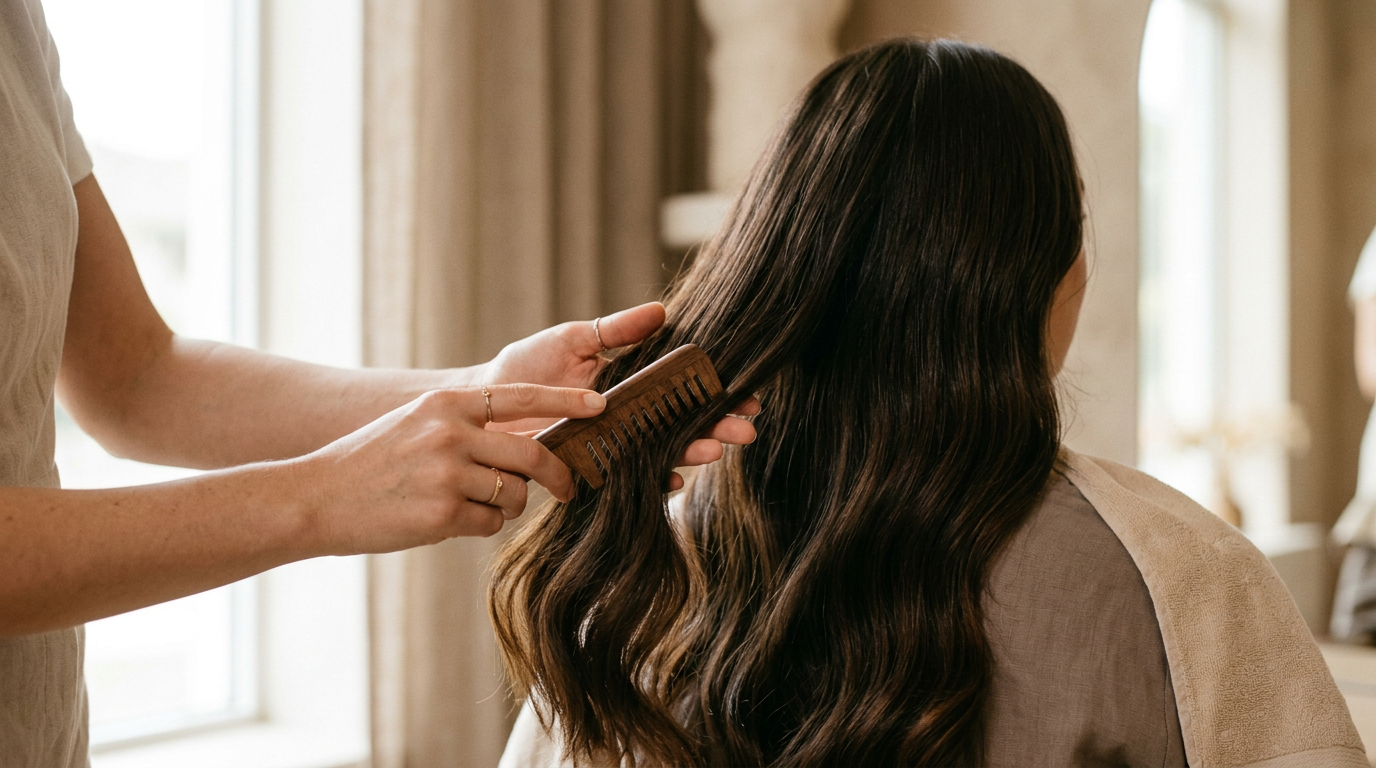
Pulling a brush straight through a knot is one of the fastest ways to snap a strand. Instead, detangle from the ends upward: hold the hair above the tangle, gently work out the bottom few inches first, and then gradually move higher.
- Use a wide-tooth comb or a brush designed for detangling your hair type.
- Handle wet hair gently. Apply conditioner or a detangling product first, and avoid yanking or tugging.
- Minimize unnecessary friction, like over-brushing or constantly running your hands through your hair.
6. Skipping Regular Trims
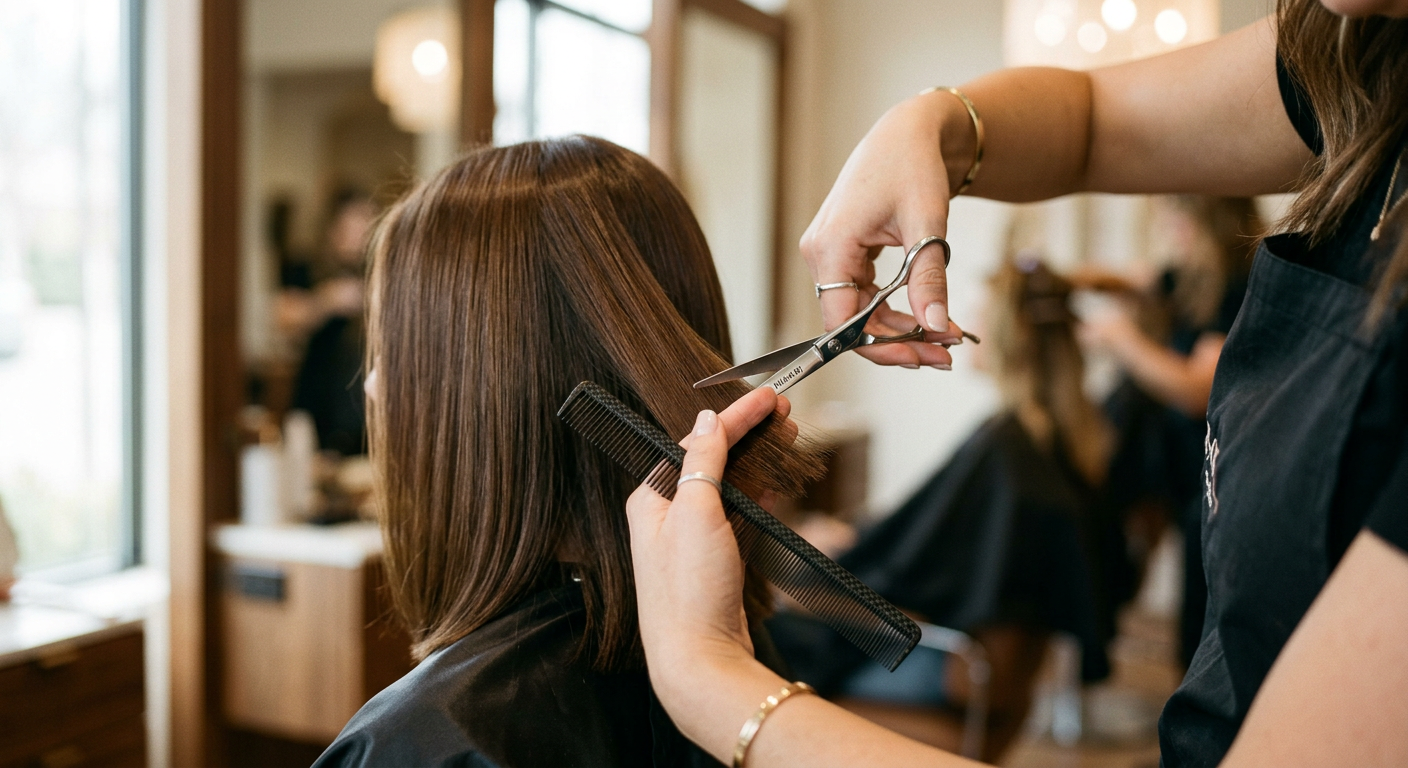
If you're noticing your hair breaking off at the ends, split ends may be part of the story. Once the end of a strand splits, that split can worsen and travel farther up the hair shaft, leaving ends that look thin and frayed. A trim removes those damaged ends before they keep working their way up.
Here's a myth I love to clear up: trims don't make your hair grow faster. Hair grows from the scalp, and cutting the ends doesn't change that biological rate. What trims do is remove damage and help your hair look and feel healthier, so it's easier to hold on to the length you're growing. How often you need one depends on your hair's condition, and we can find the right rhythm together during your next haircut appointment.
7. Environmental Damage and Everyday Habits
Some breakage comes from things we barely think about. Sun exposure, pool chlorine, rubbing your hair with a rough towel, and general rough handling all add up. Even how you sleep matters, since tossing and turning can create friction and tangles.
Here in Colorado, our dry air and strong high-altitude sun may also contribute to dryness, which can leave hair more prone to breaking.
- Wear a hat during long days outdoors.
- Wet your hair with clean water and apply conditioner before swimming, then rinse well afterward.
- Gently squeeze hair with a microfiber towel or soft T-shirt instead of rubbing.
- Sleep on a silk or satin pillowcase, or loosely secure longer hair with a soft scrunchie.
- Consider a humidifier during the driest months of the year.
Can Damaged Hair Actually Be Repaired?
This is the question I hear most, and I always want to give you an honest answer. There's a difference between improving how damaged hair looks and feels and restoring the original structure of strands that are severely damaged.
Once hair grows out from the scalp, it can't heal itself the way skin does. Split ends can't be permanently sealed back together, and severe damage can't be completely reversed by any product. What we can do is make a real difference in how your hair looks, feels, and behaves, and help keep the damage from getting worse:
- Conditioning treatments can help improve softness, shine, and manageability.
- Bond-building products may help strengthen the feel of lightened or chemically processed hair and reduce further breakage.
- Reducing heat and styling gently keep new damage from piling up.
- Professional trims remove ends that are too damaged to improve.
- Preventing additional chemical damage gives healthy new growth a chance to take over.
If you'd like a little extra support, a professional hair treatment can be a lovely place to start.
How to Prevent Hair Breakage
When it comes to how to stop hair breakage, small, consistent habits make the biggest difference. Here is a simple checklist to keep handy:
- Use heat protectant when heat styling.
- Reduce excessive heat exposure.
- Condition regularly.
- Detangle gently.
- Avoid overly tight hairstyles.
- Schedule trims based on hair condition.
- Be cautious with repeated bleaching.
- Use products suited to your hair type.
- Consult a stylist before major chemical changes.
When Should You See a Professional?
It's a great time to schedule a hair consultation if you're seeing significant breakage after a color or chemical service, if your hair suddenly feels gummy, stretchy, or unusually brittle, or if you've adjusted your routine and still can't pin down the cause. A stylist can look at your hair in person, talk through your habits, and help you build a plan, whether that's a trim, a treatment, or a gentler approach to your next color appointment.
Some changes are better evaluated by a medical professional. Please check in with your doctor or a board-certified dermatologist if you notice:
- Sudden or substantial hair loss
- Bald patches or noticeably thinning areas
- Scalp inflammation, pain, redness, or scaling
- Unexplained changes that persist or keep getting worse
Your stylist and your healthcare provider can work beautifully together, and there's never any harm in getting things checked out.
Not Sure What Your Hair Needs? Let's Talk.
Every head of hair is different. If you're dealing with breakage, dryness, or damage, Karianna can help you better understand your hair's condition and discuss styling and care options that work for you.
Appointments are available in the studio in Centennial, Colorado, or at home throughout the south Denver metro.